
Summary
Finding ways to pay for Assisted Living without selling your house is possible through several creative financing options. Understanding these alternatives can help families maintain homeownership while affording the care and support your loved one needs.
- Rental income from the property can provide steady monthly funds to cover community costs, move-in expenses, and ongoing support needs, though working with a property manager or tax professional is recommended
- A reverse mortgage allows homeowners age 62 or older to access home equity as a lump sum, monthly payments, or line of credit without selling the property
- Bridge loans offer short-term funding when a move is needed before the house sells, giving families time to prepare the property and avoid rushed decisions
- Life insurance policies with cash value, long-term care insurance, veterans benefits, and retirement savings can be combined to create a comprehensive payment strategy
- Comparing total costs—including utilities, maintenance, taxes, and repairs—helps families understand whether keeping the home plus paying for community living fits their overall budget
Many families worry they will have to sell the house to afford assisted living. But the home may still have a role to play, whether it provides rental income, short-term financing, or future flexibility.
If you're trying to pay for assisted living without selling the house, the options below can help you understand what may be possible before making a rushed decision.
Use Rental Income to Pay for Assisted Living
Renting out the house can create steady monthly income to help cover assisted living costs. This option may work well if the property is in a desirable area or if family members want to hold on to the home for future use.
Rental income to pay for assisted living can help with:
- Monthly community costs
- Initial move-in expenses
- Ongoing household costs, such as taxes, insurance, or maintenance
- Extra support needs that may change over time
Some families manage the rental themselves. Others hire a property management company to handle tenant screening, repairs, rent collection, and day-to-day questions. While that service reduces the total income, it can also make the arrangement much easier for families who already have a lot to manage.
Before choosing this route, talk with a financial advisor or tax professional. Rental income may affect taxes, benefit eligibility, and long-term planning.
Consider a Reverse Mortgage for Senior Living
A reverse mortgage for senior living may be an option for homeowners age 62 or older. It allows eligible homeowners to turn part of their home equity into cash without selling the property or making monthly mortgage payments.
Funds may be available as:
- A lump sum
- Monthly payments
- A line of credit
- A combination of these options
This can help families who want to keep the home while using its equity to pay for support. However, a reverse mortgage reduces the equity available later and may need to be repaid if the homeowner permanently moves out of the house.
Because the details matter, families should work with a HUD-approved counselor and review the terms carefully before making a decision.
Explore a Bridge Loan for Assisted Living
A bridge loan for assisted living can provide short-term funding when a family plans to sell the house later but needs money sooner. This can give everyone time to prepare the property, review the market, and avoid rushing into a sale.
A bridge loan may be useful when:
- The move is needed before the house is sold
- Families are waiting for a home sale to close
- The home needs repairs or updates before listing
- Adult children need time to make a thoughtful decision together
Home equity lines of credit, often called HELOCs, may offer another option. A HELOC lets homeowners borrow against available home equity as needed. Like any loan, this comes with repayment responsibilities, interest, and potential risk, so it should be reviewed carefully.
Look at Life Insurance and Other Financial Resources
Some life insurance policies have cash value that can be used to help pay for senior living. Depending on the policy, families may be able to borrow against the cash value, surrender the policy, use accelerated benefits, or sell the policy through a life settlement.
This option may make sense if the original purpose of the policy has changed. For example, beneficiaries may no longer depend on the policy in the same way, or current support needs may take priority.
Families may also look at:
- Long-term care insurance
- Veterans benefits
- Savings and retirement income
- Family contributions
- Proceeds from selling unused assets
The best choice depends on the person’s health needs, financial picture, and long-term goals.
Compare Costs With the Full Lifestyle in Mind
When financing assisted living while keeping the home, it helps to compare more than the monthly rate. A private house comes with expenses that can continue even after someone moves, including utilities, repairs, insurance, taxes, lawn care, and emergency maintenance.
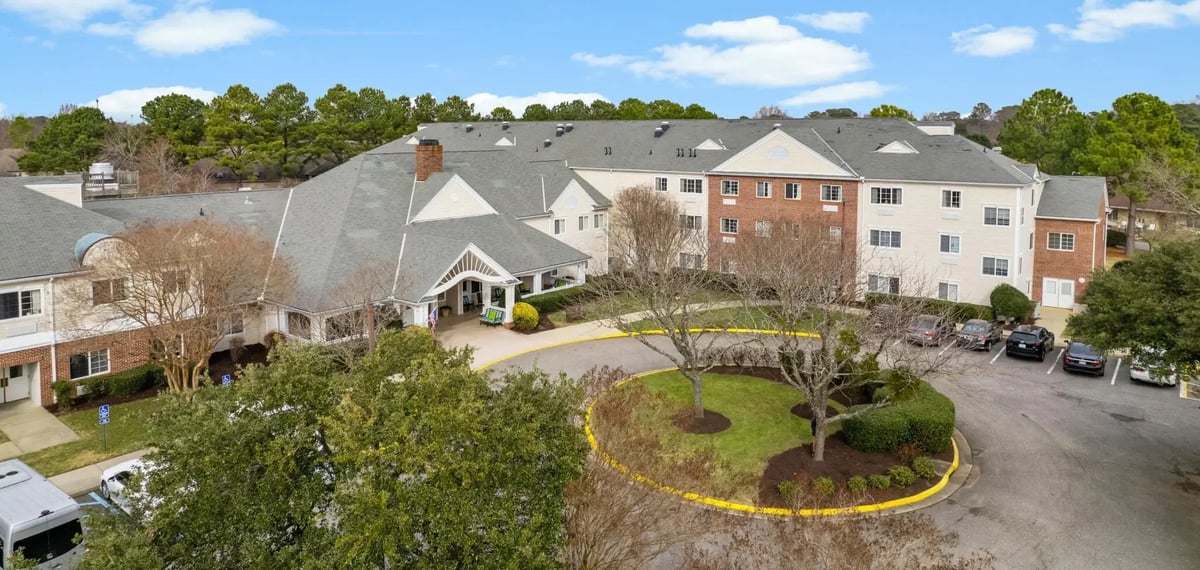
In a senior living community, many daily needs are often built into the lifestyle. At Discovery Commons Virginia Beach, we offer Assisted Living and GLOW℠ Memory Care in Virginia Beach, with chef-prepared meals, scheduled transportation, weekly housekeeping, daily events, and personalized support. The community is also located near local shops, restaurants, beaches, and coastal Virginia Beach conveniences.
That matters when families are weighing the full cost of staying at home vs. moving into a community setting.
Plan for Changing Needs Over Time
Financial planning should also account for what may change later. A person may move in for help with daily routines, meals, medication reminders, or personal support. Over time, needs may increase.
Our GLOW℠ Memory Care program is a personalized approach for residents living with Alzheimer’s disease or related dementias. This can be helpful for families who want to understand how assisted living and memory care differ before making long-term financial decisions.
Combine Options for More Flexibility
Many families don't rely on just one solution. They may use rental income for monthly costs, savings for move-in expenses, and a line of credit as a backup. Others may combine veterans benefits, long-term care insurance, or life insurance proceeds with income from the home.
Keeping house while in assisted living can be possible with a clear plan. The goal is to protect financial stability while making sure the person receives the right level of daily support.
A financial advisor, elder law attorney, or senior living counselor can help families compare options and avoid decisions that may create unexpected tax, legal, or benefit issues later.
Thoughtful support can make the next step feel more manageable. Schedule a tour of Discovery Commons Virginia Beach today.